
The women in Sudan are enduring unimaginable hardships in a nation devastated by war, poverty, and political instability Sudanese Women Condition is not Good.
Amid the ongoing Sudan Civil War, thousands of Sudanese women face extreme violence, hunger, and forced displacement — yet they continue to fight fearlessly for education, gender equality, women’s rights and live in Sudan.

These conflict-affected women are not just silent victims of the Sudan conflict — they are survivors, symbols of courage, strength, and resilience. Through their struggle, the world witnesses the true power of female empowerment and the unbroken spirit of Sudanese Women Condition standing tall in the face of war.
This article sheds light on the current Sudanese Women Condition, revealing how years of fighting and displacement have deeply affected their daily lives, mental health, and access to human rights — while also celebrating their ongoing efforts to rebuild communities, promote peace, and claim equality in a war-torn nation.
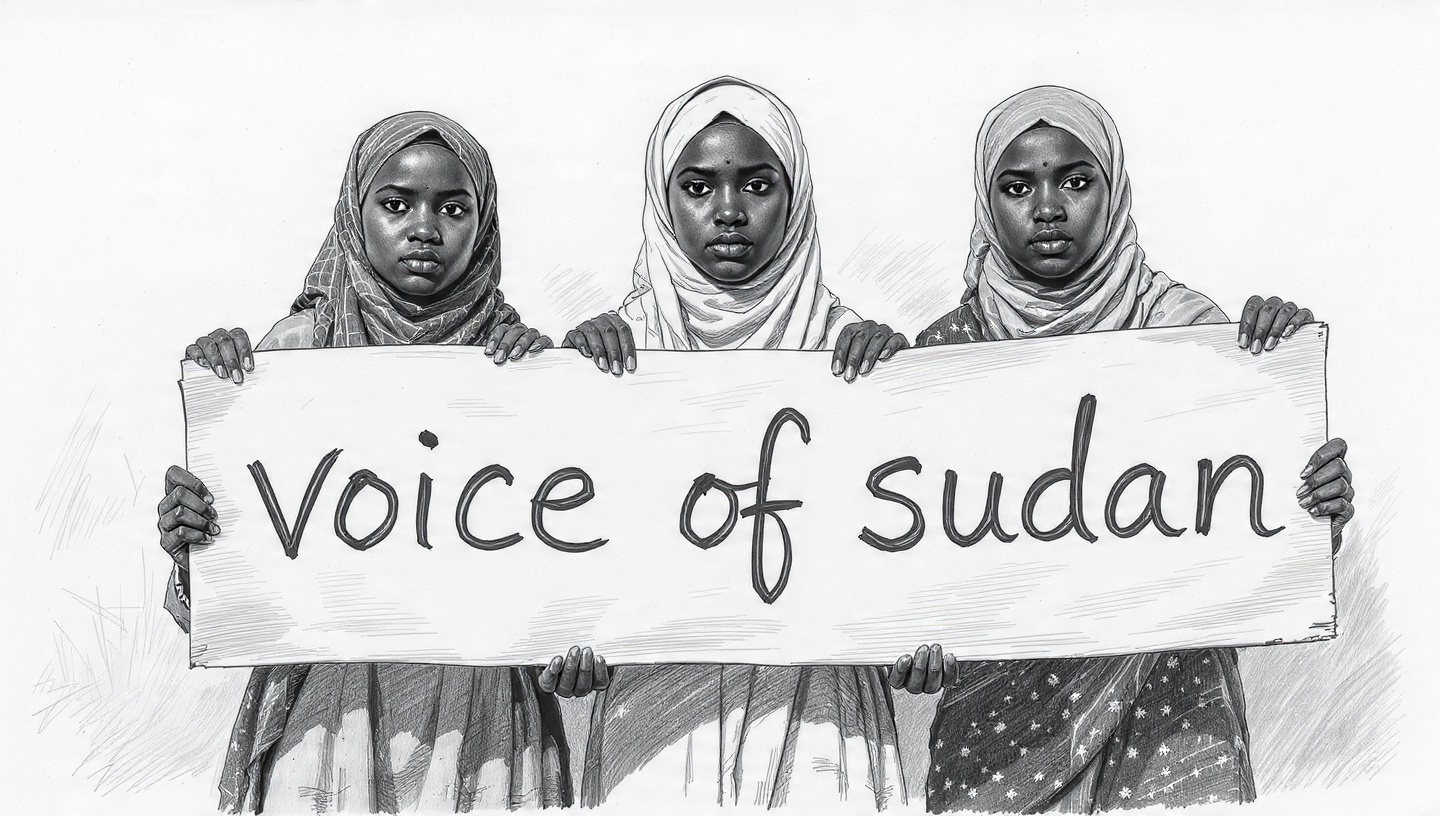
In Her Own Words: Voice Of Sudan’s Women_ Sudanese Women Condition
Sabria Mohamed Osman, Psychological Counselor ( Sudanese Women Condition)
[I am] Sabria Mohamed Osman from El Fasher and I am now displaced in Tawila locality. I used to work as a psychological counselor at the Sudanese Family Planning Association in North Darfur.
The war affected me grievously. It was painful and brought significant changes to my life. My story is strange and sad. The war started on the 26th day of Ramadan. At the beginning of the conflict, we heard the sounds of gunfire and chaos. I was living with my grandmother, when my brothers came running and said that my mother was shot in the main market. We did not know what was happening. We went out during Ramadan, running in the streets searching for her. We looked for my mother and did not find her, even in El Fasher hospitals.
The war escalated quickly, with chaos and sounds of shelling. After extreme hardships, we finally found her in the emergency room of El Fasher Hospital. The scene was unimaginable, people injured and dead, blood on the ground as we walked through. Thank God, we found my mother. They provided her with first aid and stopped the bleeding. The bullet had hit her thigh. At the same time, while we were in the emergency room, there was gunfire breaking out nearby.
We tried to ask the doctors if my mother’s condition was stable because we wanted to take her home, we were worried about what could happen next. We managed to take her home from the emergency room. The next day, there was an announcement for people to leave El Fasher. We did not even know that there was a conflict between the Sudanese army and the Rapid Support Forces.
There were people protesting because someone from their group had been killed. We thought it was just a demonstration or something similar. Until the second and third day, we didn’t know that there was a war.
We left at 3:00 AM because we heard there would be airstrikes, and people were advised to head north. We walked to the peace camp and arrived at 8:00 AM, covering the distance on foot. We split up and walked on foot. My mother was injured, and we had my grandmother with us. We managed to get them into a car and took them to my uncle’s house, which was a bit farther away. We stayed for two days and then returned home, but each time the shelling got worse, and the situation deteriorated further.
After two or three days, it stabilized a bit, but then the bombardment intensified again. A shell fell on our house injuring my sister’s two children (Mohi El-Din and Moaza). The girl’s injury was minor, but the boy’s injury was very severe. His right leg, from the hip to the toes, was completely shattered, just the bone was left. We all feared that they would have to amputate his leg. But thanks be to God, two operations were performed on him, and they put plates in his leg. He had a fracture in the bone, but now, thank God, he can walk again. Praise be to God Almighty.
When the shell fell, the house caught on fire and it destroyed everything in the house. Fortunately, people took risks and helped everyone in the house escape, but the fire consumed the house, and many fled with nothing. After that, we were transferred to the hospital and spent a month there with the injured, while some stayed with my aunt in southern El Fasher.
From there, the Rapid Support Forces tried again to put the hospital out of service. They bombed the hospital from the north and the south and the hospital courtyard. The doctors said that patients in stable condition should leave the hospital because it had become a target. After we left, they came in, raided it, stole from the pharmacy, and destroyed the operating room.
We left the hospital and went to my aunt’s house. My aunt’s house is known by everyone in north El Fasher. We all went to my aunt’s house in souht El Fasher, which turned into a large group of more than eight or nine families. From there, we split up. Some stayed in my aunt’s house, and some went to the shelters in the schools in south El Fasher. After I made sure that my sister’s children were getting better, my mother and her children went to school, and my grandmother, my other aunt, and I stayed in my aunt’s house.
After that, we still didn’t settle and were displaced again. This time, we were displaced to the far south, to a place called Umm al-Qura, at my uncle’s house. We didn’t stay long there, just two or three days, as people kept moving forward with the [Rapid] Support [Forces]. From there, everyone decided to move; this time we encountered something new called “Bankak,” and if you fell into that, it would be the end for you. The army was protecting us, but we didn’t want anything else.
In the end, all the people decided to go to Tawilah locality, a safe place, and the movements that existed were completely neutral, neither with the [Rapid] Support [Forces] nor with the army, and they were protecting the people. So, we moved to the locality. My mother’s people split up and went to a place called Qaloo Qaryat Sagheera. My grandmother and I went to Tawilah locality. If anything happened, my grandmother is a big thing, we can’t run with her because we don’t have the means, so we ended up in Tawilah locality.
Before we got to Tawilah locality, my brother Ahmed was injured when he was in the army. A shell fell on him while he was leaving the shelter at the Ittihad School, and heading to the Command. He was injured in the back, close to the spinal cord, but he was fine. Thankfully he’s okay now, thank God.
We split into three families. The young boys are still at school in El Fasher, my mother and her children are in Qolo, and my grandmother and I are in Tawilah locality. Thank God, we stay in touch daily through the network, we check on each other and ask if everything is okay. We’re managing, and we pray that things continue to ease for us.
After that, I arrived at Tawilah locality, lost everything and my job. I used to work for the Sudanese Family Planning Association, and I came here without work, stayed with my uncle, and some families were living with him. It was the rainy season, and there wasn’t much space. We built a temporary shelter for ourselves at my grandfather’s house and made a cover for it to stay dry. After that, my uncle helped us, and I volunteered at a hospital here. They have a psychological and social support office that I visit three times a week.
We also thought about ways to sustain ourselves, so I set up a place to sell zalabia [a type of sweet] in a spot where people gather and have Wi-Fi. There is also a dairy shop where I can sell zalabia, hoping things will improve. Thankfully, we’re managing to get some money to buy basic necessities.
My uncle who helped us in El Fasher, the [Rapid] Support [Forces] took him away and he has been missing since the third day of Eid al-Adha, and we haven’t heard from him since. We pray for his safe return and thank God for everything we have. Also, the Rapid Support Forces were targeting any young man or soldier, even the retired soldiers. They also targeted displaced children in the market, forcing them to carry ammunition for them—this was at the beginning of the war.
The situation has changed a lot; our lives have turned 80 or even 100 degrees, but with determination and persistence, a person tries to survive. This is something that comes from God and we cannot change it. When a person is satisfied with what he has been given, he will be able to live. As Aisha said, when we go to the center or the hospital here, we make a difference, and I get to know new colleagues.
Being in a situation like this and being able to provide support to someone who is worse off is a blessing. We visit shelters, spend time with people, and share laughter. We also do some cleaning in the shelters around where we live, clearing away weeds and trash, especially since it’s the rainy season. Thank God, things are going well with the zalabia I’m making.
I’ve realized that it’s not necessary to be an employee or live in an ideal environment; with determination and perseverance, a person can survive anywhere, at any time.
Thank you very much. The only thing I want is for God to make peace prevail and for us, the three families, to be united in one place as we were, my family, my mother and her children, my sister, and my uncle, may God free him, and also bring us together with my other uncle in El Fasher in good health. source women srefugee commission
This Is Not Only Some Women’s Voice. There Is More
- Women’s Refugee Commission – Real Voices from Sudan
A young Sudanese woman named Lubna, aged 23, shared her heartbreaking story:
“The war has added years to my age. Before the war I was 22, and now I feel like I carry the experience of a retired person.”
Lubna’s testimony, published by the Women’s Refugee Commission, highlights how the Sudan Civil War has completely transformed women’s lives. (Source: Women’s Refugee Commission – “Women of Sudan Speak Out”)
2. Human Rights Watch – Reports of Violence and Survival
“According to Human Rights Watch, several Sudanese women in South Kordofan were held as sex slaves and subjected to brutal gender-based violence during the ongoing Sudan conflict.
In interviews, seven survivors described being held captive for months, enduring unimaginable abuse. Their courage in sharing these stories brings global attention to the dark reality faced by women in war-torn Sudan.” (Source: Reuters & Human Rights Watch report, Dec 2024)
3. United Nations Women – Hope Amid Destruction
“Despite the violence, Sudanese women activists continue to demand peace and representation in decision-making.
At a recent peace conference in Uganda, women leaders urged the global community to include them in rebuilding Sudan’s future.
They have organized self-help groups, provided relief to displaced families, and restarted children’s education in conflict-hit areas.
Their resilience and leadership prove that Sudan’s women are not just victims — they are the architects of peace and change.
(Source: United Nations Sudan report, 2024)“
Sudan is currently going through one of the darkest chapters in its history. The ongoing Sudan Civil War has shattered the nation’s economy, destroyed communities, and left a deep scar on Sudan women — the most vulnerable section of society.
War, displacement, and fear have turned the lives of women in Sudan into a struggle for survival and dignity.
Since the beginning of the Sudan Civil War, Sudanese women have been fighting daily battles just to stay alive. Thousands have lost their husbands or children, while countless others have become victims of rape and gender-based violence in Sudan.
According to human rights organizations, thousands of Sudan women have been forced to leave their homes and live in refugee camps where there is no proper food, safety, or sanitation.
This war has almost destroyed women’s rights in Sudan, pushing them into a world of fear and silence.
Gender-based violence in Sudan has become one of the darkest sides of this conflict. Reports confirm that armed groups are committing brutal acts of sexual violence against women and girls in war-torn regions.
This is not just a violation of women’s rights in Sudan, but a crime against humanity.
Many Sudanese women choose to remain silent because speaking out often brings more suffering and danger.
Fear, trauma, and humiliation have now become part of their everyday lives.
The Sudan Civil War has also devastated women’s education and health systems. Schools and universities are closed, leaving thousands of women in Sudan with no access to learning.
Health care facilities have collapsed, and pregnant Sudan women cannot get basic medical care.
This crisis has created a long-term setback for , affecting the future of generations to come.
Hundreds of thousands of Sudan women refugees are now living in neighboring countries like Chad, Egypt, and South Sudan. These women and their children are surviving in temporary camps with little access to clean water or safety.
Yet, despite all the pain, Sudanese women continue to fight for their survival. Their strength and resilience show that even in the ashes of war, hope still lives.
Amidst the chaos of the Sudan Civil War, there are courageous Sudanese women leaders who are taking part in peace negotiations and community rebuilding efforts.
They are raising their voices for justice and demanding the restoration of women’s rights in Sudan.
Their mission is to build a future where every Sudan woman can live with freedom, equality, and dignity.
The road ahead for Sudan women is challenging, but not impossible.
If the international community, NGOs, and human rights groups come together, the Sudan women condition can improve.
Investing in education, healthcare, and security is essential for rebuilding Sudanese women empowerment.
The courage of Sudan women teaches us that even when the world turns silent, hope finds its voice through the strength of a woman.
Why Did the War Start in Sudan? (Sudan Civil War Causes Explained)
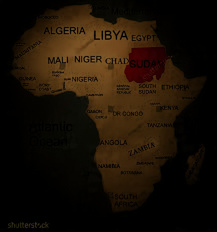
The ongoing Sudan Civil War is one of the most complex and tragic conflicts in modern African history. To understand why this war began, it’s important to look at the deep political, military, and ethnic divisions that have shaped Sudan for decades.
Historical Background
After gaining independence from British-Egyptian rule in 1956, Sudan faced continuous internal tensions. The country was divided between the Arab-dominated north and the African ethnic communities in the south and west.
These differences in religion, language, and culture planted the seeds of mistrust that later exploded into conflict.
Although the Second Sudanese Civil War (1983–2005) ended with a peace deal and the creation of South Sudan in 2011, new power struggles soon emerged within Sudan itself.
The Rise of Military Rivalry
The current Sudan conflict, which began in April 2023, is mainly a result of a power struggle between two military forces:
- The Sudanese Armed Forces (SAF), led by General Abdel Fattah al-Burhan.
- The Rapid Support Forces (RSF), a powerful paramilitary group led by General Mohamed Hamdan Dagalo, also known as “Hemedti.”
After the fall of long-time dictator Omar al-Bashir in 2019, both generals promised a transition to democracy. However, their rivalry over who should control the military and political future of Sudan triggered intense fighting in the capital, Khartoum, and across the country.
The war in Sudan is not just about politics; it’s also about control of resources.
Sudan is rich in gold, oil, and agricultural land, and both sides want control over these assets to strengthen their power.
This competition for wealth and influence has fueled continuous violence, destroying cities, hospitals, and homes, and leaving millions displaced — including thousands of women and children
As the Sudan Civil War deepens, civilians have become the biggest victims.
Millions of people have lost access to food, clean water, and medicine.
Women face widespread gender-based violence, and humanitarian aid struggles to reach those in need.
The international community, including the United Nations and African Union, has called for peace talks, but neither side shows willingness to compromise.
The war in Sudan began as a battle for power, but it has now turned into a humanitarian crisis.
Until both rival generals step back and allow democratic governance, peace in Sudan will remain a distant dream.
For now, the Sudanese people — especially women — continue to suffer the consequences of a conflict born from greed, division, and the thirst for control.
1. What is the current condition of women in Sudan?
The condition of women in Sudan is extremely challenging. Many face displacement, hunger, and violence because of the Sudan Civil War, yet they continue to fight for survival, education, and equality
2. How has the Sudan Civil War affected Sudanese women?
The Sudan Civil War has left thousands of Sudanese women homeless and vulnerable to gender-based violence. Many have lost their families, while others have become the primary caretakers and leaders in their communities.
3. What are Sudanese women doing to support peace and stability?
Despite the hardships, Sudanese women activists and community leaders are working for peace, education, and female empowerment. They organize local relief efforts and advocate for women’s participation in peace talks
4. What are the main challenges faced by women in Sudan today?
The biggest challenges for women in Sudan include lack of safety, poor healthcare, food shortage, sexual violence, and limited access to education and employment opportunities.
5. How can international organizations help Sudanese women?
Global organizations can help by supporting humanitarian aid, funding women’s rights programs, and ensuring gender equality in Sudan’s reconstruction efforts. Protecting women and children should be a top priority in any peace plan.
6. Are Sudanese women involved in rebuilding their country?
Yes, many Sudanese women are leading local NGOs, refugee aid centers, and peace movements. Their courage and leadership are shaping Sudan’s recovery and inspiring future generations.
Read Also
Global Women Empowerment 2025: How Women Are Shaping the Future?
2 thoughts on “The Condition of Sudan Women During the Civil War _Sudan Women Condition in Civil War”